advertisement
16 November 2026
Arizona is home to some of the most extraordinary landscapes in the American Southwest, from hidden turquoise waterfalls and swirling sandstone canyons to remote desert wilderness areas that few people ever get to experience. But some of these destinations require more planning than simply packing a backpack and hitting the trail.
Many of Arizona’s most spectacular natural attractions require permits, reservations, or authorization from the landowners or agencies responsible for protecting them. Some permits are awarded through competitive lotteries, while others can be obtained online, purchased at a trailhead, or arranged through an authorized guide.
These restrictions aren’t simply about limiting visitors. Permit systems help protect fragile ecosystems, preserve culturally significant places, manage overcrowding, and reduce risks in remote wilderness areas where emergency assistance may be hours away.
Whether you’re planning to visit Havasupai Falls, hike to The Wave, explore Antelope Canyon, or venture into one of Arizona’s lesser-known wilderness areas, understanding the rules before you go can save you from a disappointing and potentially expensive surprise.
This guide covers Arizona’s major permit-controlled destinations, along with several popular places where permits are required only for certain activities or seasons. Because rules can change, always confirm the latest requirements with the managing agency before making travel arrangements.
advertisement
Location: Near the Grand Canyon
Requirement: Tribal reservation required
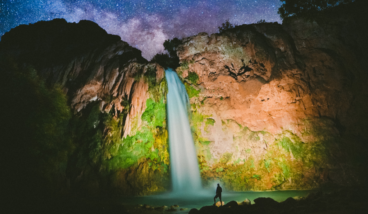
Few Arizona destinations are as recognizable as Havasu Falls, where brilliant turquoise water spills over red rock cliffs into pools below. The waterfalls lie within the Havasupai Reservation, which is administered by the Havasupai Tribe rather than Grand Canyon National Park.
Visitors must obtain an official reservation before entering. Reservations generally cover a four-day, three-night visit, with accommodations at the campground or lodge. Day hiking is not permitted, and arriving without a reservation is not an option. The hike from Hualapai Hilltop to the campground is approximately 10 miles one way, making this a serious backcountry adventure rather than a casual sightseeing stop.
How to get permission: Book through the Havasupai Tribe’s official reservation website. Reservations are limited, and visitors must follow all tribal regulations.
Location: Vermilion Cliffs, near the Utah border
Requirement: Lottery permit
The Wave is one of the Southwest’s most photographed geological formations, famous for its flowing bands of orange, red, and yellow sandstone. Its extraordinary appearance makes it a bucket-list destination, but it is also one of Arizona’s most tightly controlled hikes.
The Bureau of Land Management requires a permit for everyone entering Coyote Buttes North. Permits are distributed through an advance lottery and a separate daily lottery. The hike to The Wave is approximately 6.4 miles round-trip across rugged, unmarked wilderness, requiring strong navigation skills and preparation for extreme weather.
How to get permission: Apply through the BLM’s official Wave permit page. The advance lottery operates four months ahead, while the daily lottery requires applicants to be within the designated geographic area.
Location: Vermilion Cliffs
Requirement: Limited-entry permit
Although The Wave receives most of the attention, nearby Coyote Buttes South offers equally remarkable sandstone formations, colorful ridges, and unusual rock textures. Its remote location and difficult access roads make it less visited, but the scenery is extraordinary.
Coyote Buttes South has its own permit system, separate from Coyote Buttes North. A permit for one area does not authorize entry into the other. There are no developed trails or visitor facilities, and reaching some trailheads may require a suitable high-clearance four-wheel-drive vehicle.
How to get permission: Reserve through the BLM Arizona permit system.
Location: Page
Requirement: Authorized guided tour required
Antelope Canyon is famous for its sculpted sandstone walls, narrow passageways, and shafts of sunlight that illuminate the canyon in spectacular shades of orange and gold. Located on Navajo Nation land near Page, the canyon is one of Arizona’s most popular photography destinations.
Visitors cannot simply hike into Upper or Lower Antelope Canyon independently. Access requires an authorized Navajo-guided tour, with the necessary permissions arranged through the tour operator. Upper Antelope Canyon is generally more accessible, while Lower Antelope Canyon involves stairs, ladders, and more physically demanding passages.
How to get permission: Reserve with an authorized tour company. Visit Visit Arizona’s Antelope Canyon guide for planning information.
Location: Southeastern Arizona, near Winkelman and Klondyke
Requirement: Advance wilderness permit
Aravaipa Canyon is one of Arizona’s most remarkable hidden wilderness destinations. Towering canyon walls surround a flowing creek, creating a lush riparian environment filled with cottonwood trees, wildlife, and spectacular scenery.
Unlike many Arizona hikes, Aravaipa requires a permit for recreational entry into the designated wilderness, whether visitors are staying overnight or exploring for the day. The number of visitors is restricted to preserve the canyon’s solitude and sensitive environment. Permits specify the entry trailhead and dates, and trips are limited to three days and two nights.
How to get permission: Reserve through Recreation.gov’s Aravaipa Canyon Wilderness permit page. Check access conditions carefully, especially after storms, because flooding can make roads and creek crossings impassable.
Location: Near Camp Verde and Strawberry
Requirement: Seasonal parking reservation
Fossil Creek is one of Arizona’s most beautiful natural waterways, with clear blue-green water, waterfalls, and swimming areas surrounded by rugged canyon scenery.
During the busy season, access to designated Fossil Creek parking areas requires an advance reservation. The permit system generally operates from April 1 through October 1, while permits are generally not required from October 2 through March 31. A reservation authorizes parking at a specific location, not unrestricted access to every part of the creek.
How to get permission: Reserve through Fossil Creek’s official permit page. Seasonal road closures, arrival deadlines, and restrictions may apply.
Location: Near Strawberry
Requirement: Seasonal trailhead parking permit
The Bob Bear Trail descends into Fossil Creek’s rugged upper canyon, providing access to Fossil Springs and surrounding wilderness. The approximately eight-mile round-trip hike includes a steep climb on the return journey and can be dangerously hot during summer.
During the seasonal permit period, visitors parking at Bob Bear Trailhead must obtain an advance parking permit. The trail is notorious for heat-related rescues, so hikers should not underestimate the difficulty.
How to get permission: Use the Bob Bear Trailhead reservation page. Permits are generally required April 1 through October 1.
Location: Northern Arizona and southern Utah
Requirement: Day-use or overnight permit
Paria Canyon and Buckskin Gulch contain some of the Southwest’s most spectacular slot-canyon scenery. Visitors can explore narrow sandstone corridors, towering canyon walls, and winding passages shaped by water over millions of years.
Unlike The Wave, these destinations generally use a simpler day-use permit system. Day hikers can obtain permits at designated trailhead stations or through Recreation.gov. Overnight trips are more restricted, with advance permits and a limit of 20 entrants per day.
How to get permission: Follow the BLM’s Paria Canyon permit instructions. Flash floods are a serious hazard even when rain is falling miles away.
Location: Eastern Arizona
Requirement: Seasonal river permit and lottery
The Upper Salt River cuts through a spectacular wilderness of steep canyon walls, desert vegetation, and challenging whitewater. Often called Arizona’s other Grand Canyon, it offers one of the state’s most adventurous rafting experiences.
Private boaters need a permit to float the Salt River Canyon Wilderness during the managed season, March 1 through May 15. Permits are distributed through a lottery, and the river includes demanding rapids that require advanced whitewater skills.
How to get permission: Apply through the Salt River Canyon Wilderness permit system. The lottery application period generally runs from December 1 through January 31.
Location: Grand Canyon National Park
Requirement: Overnight backcountry permit
Millions of people visit the Grand Canyon’s overlooks without needing a special hiking permit. However, spending the night below the rim is a different matter.
Overnight backpacking trips, including stays at Bright Angel Campground, Havasupai Gardens Campground, and designated backcountry campsites, require a backcountry permit. Popular itineraries can be highly competitive, particularly during spring and fall.
How to get permission: Apply through the Grand Canyon National Park permit system. Ordinary day hiking does not require a backcountry permit, although certain specialized activities do.
Location: Grand Canyon National Park
Requirement: River trip permit
Rafting the Colorado River through the Grand Canyon is one of the most extraordinary wilderness experiences in the United States. Trips can involve days or weeks navigating rapids, camping on remote beaches, and exploring side canyons inaccessible from the rim.
Noncommercial river trips require permits administered by the National Park Service. Commercial rafting companies operate under separate authorizations, so travelers joining an outfitted trip generally book directly with the company rather than applying for an individual river permit.
How to get permission: Review the Grand Canyon river permit information for current lottery and application procedures.
Location: Tucson
Requirement: Backcountry campsite reservation
Saguaro National Park is famous for its towering cacti, but its eastern Rincon Mountain District also protects remote wilderness that rises from the Sonoran Desert into cooler mountain forests.
Visitors planning to camp overnight in the designated backcountry must obtain a reservation. Camping is limited to six established wilderness campgrounds, including Manning Camp, Douglas Spring, and Grass Shack. Ordinary day hiking does not require this camping permit.
How to get permission: Reserve through Saguaro National Park’s backcountry camping information.
advertisement
Location: Chinle
Requirement: Backcountry permit and authorized guide
Canyon de Chelly National Monument protects dramatic sandstone cliffs, ancient archaeological sites, and landscapes that remain home to Navajo families.
Visitors can explore the North and South Rim overlooks independently without a permit. Access to canyon-floor trails and other backcountry areas is more restricted and generally requires an authorized Navajo guide and any applicable permissions. Self-guided trail access can change, so visitors should confirm which routes are currently open.
How to get permission: Arrange a tour through an authorized operator and follow the National Park Service’s current visitor guidance.
Location: Arizona–Utah border
Requirement: Backcountry permit or guided access
Monument Valley’s enormous sandstone buttes are among the most recognizable landscapes in the American West. The area is administered by the Navajo Nation, and its cultural significance extends far beyond its popularity as a photography destination.
Visitors can experience the designated scenic drive by paying the appropriate entry fees. However, hiking and camping in authorized backcountry areas require additional permissions, and many areas are accessible only through Navajo-guided tours. Visitors should not assume they can wander beyond established routes.
How to get permission: Consult Navajo Nation Parks and Recreation’s Monument Valley information.
Location: Northern Arizona–southern Utah region
Requirement: Tribal backcountry permit
Rainbow Bridge is one of the world’s largest natural bridges and a place of deep cultural significance to several Indigenous communities.
Although the monument itself is in Utah, traditional overland hiking approaches cross Navajo Nation lands in the Arizona–Utah border region. These routes require permission from Navajo Nation Parks and Recreation. Access by boat through Lake Powell is subject to different rules and changing water conditions.
How to get permission: Check Navajo Nation backcountry regulations before planning an overland hike.
Location: Northern and northeastern Arizona
Requirement: Tribal authorization
Additional Navajo Nation destinations require backcountry permits for approved recreational activities. These include designated areas around the Little Colorado River, Bowl Canyon Recreation Area, and portions of the San Juan River corridor.
Permission is not universal across the reservation. Some locations are closed to recreational access entirely, including certain canyons and community areas where trespassing has created concerns for residents and cultural resources.
How to get permission: Contact Navajo Nation Parks and Recreation for the specific destination. A permit for one area does not authorize access to unrelated locations.
Location: Eastern Arizona
Requirement: Activity-specific tribal permits
The Fort Apache Indian Reservation includes beautiful rivers, mountain landscapes, forests, and waterfalls. Many recreational opportunities are administered through the White Mountain Apache Tribe’s own permit system.
Visitors should obtain the appropriate tribal authorization for activities such as fishing, camping, or access to designated recreation areas. Cibecue Falls is especially important to check before traveling because access has been subject to closures related to flash-flood safety concerns.
How to get permission: Consult White Mountain Apache Game and Fish for current permits and closures. A permit does not override a closure.
Location: Near Ajo
Requirement: Free access permit required
Cabeza Prieta protects an enormous expanse of remote Sonoran Desert wilderness, offering exceptional opportunities for solitude, wildlife observation, photography, and primitive desert exploration.
Despite its remoteness, the refuge is open to permitted visitors. Visitors must obtain a free access permit before entering areas where authorization is required. Travel is restricted to designated roads, and certain areas may be closed for safety or conservation reasons.
How to get permission: Follow the instructions on the U.S. Fish and Wildlife Service’s refuge visitor page.
Location: Southwestern Arizona
Requirement: Military range access permit
Some of Arizona’s most remote desert scenery lies near active military training areas. Authorized public portions of the Barry M. Goldwater Range offer access to rugged desert terrain, historic routes, and expansive landscapes rarely experienced by casual visitors.
Access requires a range permit and completion of the applicable safety requirements. These are not ordinary recreation areas. Visitors must remain within authorized zones and follow all military safety restrictions.
How to get permission: Check the BLM’s Arizona permit information and the current military range access instructions before traveling.
Location: Northern Arizona
Requirement: Written recreational access permission
The Hopi Three Canyon Ranch encompasses several properties in northern Arizona where recreational access is managed through an agreement between the Hopi Tribe and Arizona Game and Fish Department.
Visitors accessing approved portions of Aja Ranch, Clear Creek Ranch, and Hart Ranch must obtain written permission. Access authorizations are valid for 30 days, and visitors must carry proof of permission while on the property.
How to get permission: Complete the access form through Arizona Game and Fish’s Hopi Three Canyon Ranch program.
Location: Near Roosevelt Lake
Requirement: Guided tour reservation
Tonto National Monument preserves remarkable cliff dwellings built by Indigenous communities centuries ago. While the Lower Cliff Dwelling can be visited independently during designated hours, the Upper Cliff Dwelling is accessible only through a ranger-guided tour.
Tours involve a challenging three-mile round-trip hike and provide an opportunity to learn about the people who lived in the Tonto Basin during the 1300s and 1400s.
How to get permission: Reserve by calling the park at 928-467-2241. Tours are generally offered on selected winter-season days, and advance reservations are required. Check the official Upper Cliff Dwelling tour page for the latest schedule.
| Destination | Requirement | Where to Arrange It |
|---|---|---|
| Havasupai Falls | Advance overnight reservation | Havasupai Tribe |
| The Wave | Lottery permit | BLM / Recreation.gov |
| Coyote Buttes South | Limited-entry permit | BLM / Recreation.gov |
| Antelope Canyon | Authorized guided tour | Navajo tour operator |
| Aravaipa Canyon | Day or overnight permit | Recreation.gov |
| Fossil Creek | Seasonal parking reservation | Recreation.gov |
| Bob Bear Trailhead | Seasonal parking reservation | Recreation.gov |
| Paria Canyon / Buckskin Gulch | Day-use or overnight permit | BLM / Recreation.gov |
| Upper Salt River rafting | Seasonal river permit | Recreation.gov |
| Grand Canyon overnight backpacking | Backcountry permit | National Park Service |
| Grand Canyon private rafting | River trip permit | National Park Service |
| Saguaro backcountry camping | Campsite reservation | Recreation.gov |
| Canyon de Chelly canyon tours | Permit and guide | Navajo Nation/tour operator |
| Monument Valley backcountry | Permit / authorized access | Navajo Nation |
| Rainbow Bridge overland routes | Tribal backcountry permit | Navajo Nation |
| Selected Navajo Nation backcountry areas | Tribal permit | Navajo Nation |
| White Mountain Apache recreation areas | Activity-specific tribal authorization | Tribal Game and Fish |
| Cabeza Prieta refuge | Free access permit | U.S. Fish and Wildlife Service |
| Barry M. Goldwater Range | Range access permit | Military range permit system |
| Hopi Three Canyon Ranch | Written access permission | Arizona Game and Fish |
| Tonto Upper Cliff Dwelling | Guided tour reservation | National Park Service |
Not every popular Arizona attraction requires a special permit. Grand Canyon overlooks, most ordinary day hikes in national parks, and many state park trails are accessible with standard admission or parking fees rather than limited-entry permits.
It’s important to distinguish among four different requirements: an entrance fee, a parking pass, a reservation, and a restricted-access permit. Paying admission to a park does not necessarily authorize backcountry camping, while obtaining a wilderness permit may not cover unrelated entrance or parking fees.
Another important distinction is between permit-only and closed. For example, Navajo Nation has listed Grand Falls as closed to public access, and Cibecue Falls has experienced closures because of flooding concerns. Travelers should confirm current status with the appropriate tribal authority rather than assuming a permit allows entry.
The first step is to identify who manages the land. Arizona’s public and recreational landscapes fall under many different authorities, including the National Park Service, Bureau of Land Management, U.S. Forest Service, tribal governments, wildlife agencies, and private landowners.
Once you’ve identified the managing authority, determine whether you need a limited-entry permit, a parking reservation, an overnight camping authorization, or an approved guide. Some destinations, such as The Wave, require entering a lottery months ahead of time. Others, such as certain Paria Canyon day hikes, allow visitors to obtain permits closer to their arrival date.
Always check current closures, weather forecasts, and access roads before traveling. Flash flooding can make slot canyons deadly, while remote desert roads may become impassable after storms. Many permit-controlled destinations have limited cell service, no drinking water, and few emergency resources.
Most importantly, respect the restrictions. Permit systems protect more than scenery. They also preserve archaeological sites, sensitive wildlife habitats, and places of cultural and spiritual importance to Indigenous communities.
advertisement
Some of Arizona’s greatest adventures aren’t found beside a highway or at the end of an easy scenic drive. They’re tucked into remote canyons, hidden behind towering sandstone formations, or protected within landscapes where access must be carefully managed.
The extra planning can be frustrating, particularly when permits sell out or lotteries are competitive. But those restrictions help keep extraordinary places from being overwhelmed by the very popularity that makes them appealing.
Whether your dream is to photograph The Wave, swim beneath Havasu Falls, explore Aravaipa Canyon, or spend a night deep within the Grand Canyon, understanding Arizona’s permit systems is the first step toward making that adventure possible.
And with so many remarkable destinations across the state, there’s always another place worth discovering.
advertisement
Arizona is already home to some of the most spectacular landscapes in the country, and now one of its lesser-known natural wonders is getting national recognition. On October 20, 2026, Chiricahua National Monument was officially elevated to national park status. The designation makes Chiricahua Arizona’s fourth national park and the 64th national park in the United States. Located in southeastern Arizona’s Cochise County, near the town of Willcox, Chiricahua National Park is famous for its towering rock columns, gravity-defying balanced boulders, and extraordinary volcanic landscape. Although the area has been federally protected for more than a century, its new designation
Imagine a bird with a wingspan stretching nearly ten feet, soaring effortlessly above the Grand Canyon. It’s one of North America’s largest flying birds, capable of traveling enormous distances on rising currents of warm air. And just a few decades ago, the species nearly disappeared forever. The California condor is one of America’s most remarkable conservation success stories, and despite its name, Arizona has played a major role in bringing this magnificent bird back from the brink of extinction. Through captive breeding, carefully managed releases, wildlife monitoring, and cooperation between conservation organizations, Arizona helped establish a second wild population of
Imagine taking your children to a neighborhood playground on a sunny Arizona afternoon when you notice something moving through the grass nearby. At first, you might think it’s someone’s dog. But as it gets closer, you realize you’re looking at a coyote. Should you be alarmed? Why is a wild animal wandering around a playground in broad daylight? Isn’t it supposed to be hiding somewhere in the desert? Believe it or not, spotting a coyote in an unexpected place is not particularly unusual, especially in Arizona. Coyotes are among North America’s most adaptable wild animals, and they’ve become remarkably successful
Finding a rattlesnake in your yard can be alarming, especially if you have children or pets. But before you reach for a shovel or try to chase the snake away, remember one important thing: the safest rattlesnake encounter is usually the one where you keep your distance. Rattlesnakes are a natural part of life in Arizona, particularly in neighborhoods near washes, mountains, desert preserves, and undeveloped land. While their venom makes them potentially dangerous, rattlesnakes generally aren’t looking for a confrontation with people. Most would much rather escape than fight. If one turns up in your yard, knowing what to