advertisement
8 January 2022
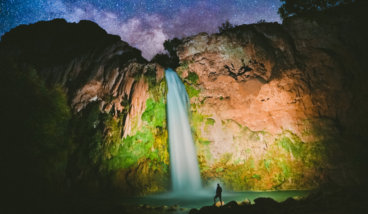
There is a landscape that looks too surreal and beautiful to be true at the western edge of the Grand Canyon. There is an incredible contrast between red/brown canyon walls, lush green vegetation, and turquoise waters on the sacred lands of the Havasupai Tribe. It’s a bucket list item for many backpackers, campers, and outdoor enthusiasts to visit Havasu Falls on the Havasupai Reservation, and we are lucky that visitors are allowed access to these tribal lands.
Before booking a trip to this hot spot, there are a few things you should know:
advertisement
The peak season for visiting the Havasupai Waterfalls is from February to November. You can avoid the crowds if you visit in the earlier months but note that the waters will also be colder during this time.
It is also worth noting that in the summer season, from June to August, the trails for hiking are subject to closing due to risks of flooding and extreme temperatures that can rise to above 115°F or 46°C.
1. You need a permit and reservation for Havasu Falls.
Havasupai land can only be visited with a permit. Camping permits go on sale on their website on February 1 at 8 am Arizona time, and are sold out within minutes. You cannot hike in the canyon on a day trip. You must stay in the canyon to visit the canyon! Lodge reservations are a bit more complicated – they go on sale on June 1 and require phone calls.
What you need to know:
2. Expect to pay additional fees and taxes.
Aside from paying for your overnight stay, permit, and transportation to the falls, bring extra cash to cover environmental fees and other payables along the way.
3. There are three ways to get to the falls.
You can get to Havasu either by hiking, horseback which you can book through the tourist office, or a helicopter which will cost about $85 one way.
4. You must be physically fit.
If you plan to hike your way to the Havasu Falls, make sure that you are healthy and have done enough exercise to prepare your body for a long, exhausting, yet worthwhile walk.
advertisement
From the Las Vegas depot and Phoenix depot, the hilltop (aka trailhead parking area) is about 4 1/2 hours away. A rather deserted two-lane road (Indian Road 18) surrounds the last 60 miles of the drive to the trailhead. Fill up on gas and supplies before you begin the drive! Peach Springs, off Route 66, is the nearest town. Watch out for animals on the road; cattle cross everywhere. If possible, drive this stretch in daylight to avoid an unfortunate animal encounter.
What you need to know:
Now, you are ready to book your trip to Havasu Falls. Just stick to our guide and you’re guaranteed to have the best experience.
advertisement
Long before astronauts set foot on the lunar surface, scientists in Arizona were already studying it in remarkable detail. By the time President John F. Kennedy announced in 1961 that the United States would land a man on the moon before the end of the decade, researchers at the University of Arizona had already begun mapping the moon’s surface. Their work would prove critical to the success of NASA’s robotic missions and the historic Apollo landings. At the center of this effort was Gerard P. Kuiper, widely known as the father of modern planetary science. advertisement The Birth of Lunar
Arizona is a paradise for bird watchers, offering a diverse range of habitats that support both native species and migratory birds. From its desert landscapes to its high-altitude mountains, Arizona is home to an astonishing array of bird species. However, some birds in the state are considered rare, either due to their limited range, dwindling populations, or specific habitat preferences. In this article, we’ll explore some of the rarest birds in Arizona and what makes them so special. advertisement 1. California Condor (Gymnogyps californianus) Status: Critically Endangered The California Condor is arguably one of the most iconic rare birds in
Arizona summers can make outdoor play feel impossible, especially in the middle of the day. The good news is there are plenty of affordable, family-friendly options that keep kids cool, active, and entertained without turning it into a big-ticket outing. Below are budget-friendly ideas across the Valley, including museums, indoor play spots with strong reviews, and free or low-cost options for early mornings and evenings. advertisement 1) Affordable Indoor Museums (Air-Conditioned and Worth It) Idea Museum (Mesa) If you have younger kids who love hands-on play, art, and creative exploration, the Idea Museum is a solid summer option. It is
Arizona is known for the Grand Canyon, cactus-filled deserts, and dramatic sunsets. But beyond the obvious, the Grand Canyon State is packed with surprising history, natural oddities, and quirky records. Here are some fun Arizona facts that might just impress your friends at your next trivia night. advertisement 1. Arizona Does Not Observe Daylight Saving Time Most of Arizona does not observe Daylight Saving Time, which means the state stays on Mountain Standard Time all year long. The exception is the Navajo Nation, which does observe Daylight Saving Time. So you can cross into a different time zone just by